
Request Samples
Leap is a next-gen material based on apple pulp, supplied by the linear meter at 1.4 m usable width. Leap Flex is the line for upholstery. Contract-grade abrasion, BS 5852 Part 0 and Part 1, California TB 117, and IMO Part 8 for marine interiors. Mutebox runs its whole seating line on it.
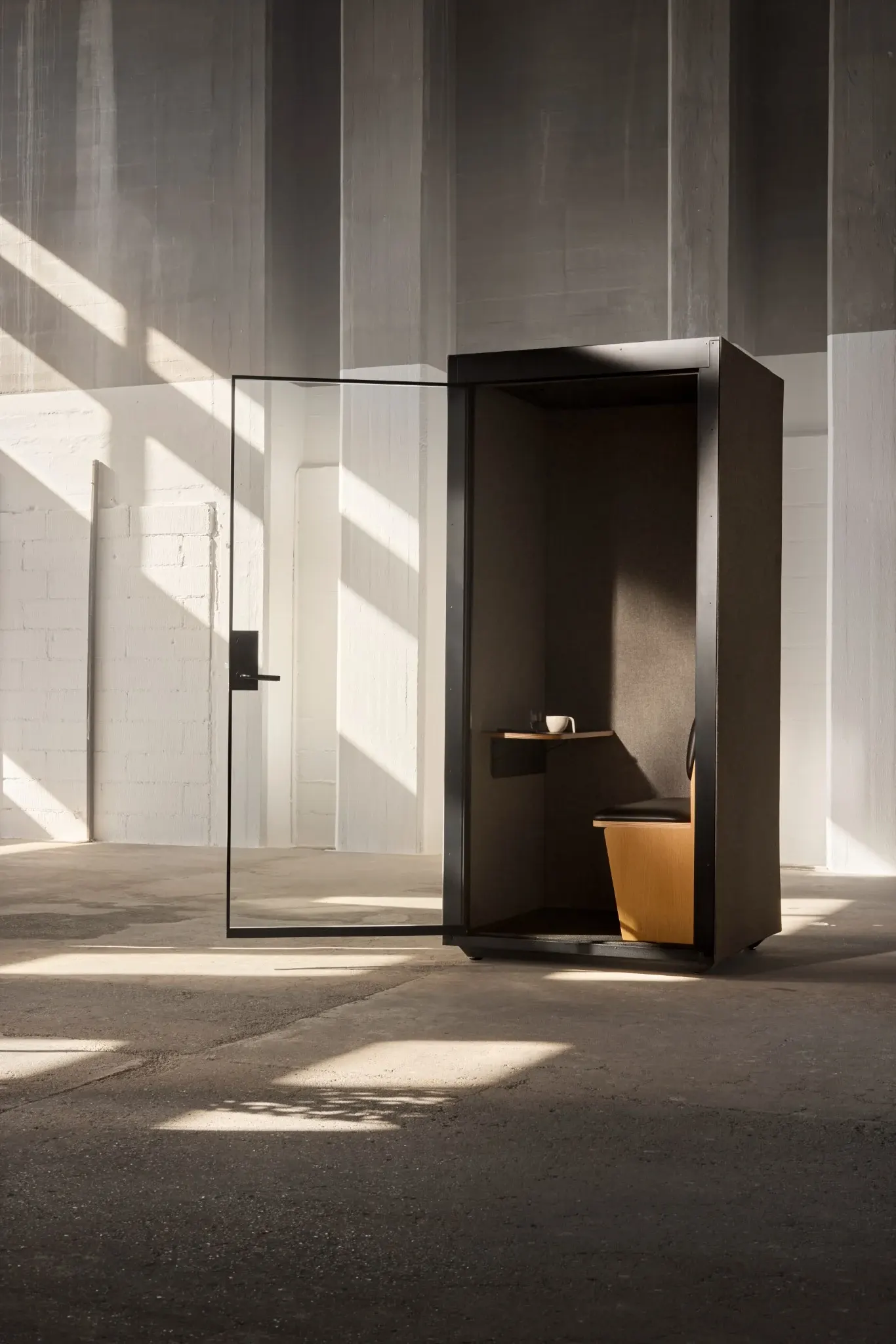
Architects are a key audience for Mutebox, and they ask about materials before they ask about anything else. These are the six points that made a non-leather upholstery material the better specification, not the compromise.
01
Over 100,000 Martindale cycles at 12 kPa. 50,000 flexes with no damage, wet or dry. Grade 6 lightfastness under xenon arc, and the flammability results a workplace project needs. Not one headline figure, but the whole row of tests a contract specification asks for.
02
Patina is beautiful on an old armchair and a problem across a workplace order. Look and feel stay consistent, so a repeat order or a replaced seat pad still matches.
03
Six PFAS, including PFOA and PFOS, below 0.025 mg/kg on Leap Original, tested to DIN CEN/TS 15968.
04
1.4 m of usable width, edge to edge. No mosquito bites, no scars, no thin bellies to cut around. Nesting is planned once and repeats on every run, saving costs, time and waste.
05
Third-party test reports for abrasion, flex, tear, lightfastness and flammability, the USDA biobased certificate and the Vegan Trademark, most of them downloadable directly from the resources page. When the furniture product passport rules are set, the substance data they will ask for already sits on file.
06
USDA Certified Biobased Product, vegan certified, and a full set of third-party test reports behind every figure on this page. All of it sits on the resources page for a specifier to download and attach.
An apple pulp core, a 100% recycled polyester backing and a partly biobased, partly waterborne PU topcoat. Below is the tested performance of Leap Flex, the variant used on the benches and barstools, so you can hold it against your own specification for contract furniture upholstery material.
Clean with a damp cloth and do not wash. Lead times run from payment confirmation. Custom color and texture is available and carries a MOQ.
A Mutebox bench lives in a workplace, not a living room. It takes denim, zips, cleaning routines and dozens of different users a day, and it has to match the barstool ordered two years later. Components are designed to be replaced or upgraded rather than thrown out, which only works if the surface material still looks like itself when the replacement part arrives. Leather was the obvious starting point and the wrong one.
A hide that darkens and softens in the places people sit cannot do that, so anything that ages quickly was out. Leap does not patina, and it clears contract-grade abrasion and flex testing. Sourcing was never the hard part for Mutebox, who work only with certified partners, from OEKO-TEX® textiles to Cradle to Cradle fabrics. Finding a next-gen material for furniture that matched their quality standards and the mindset was.
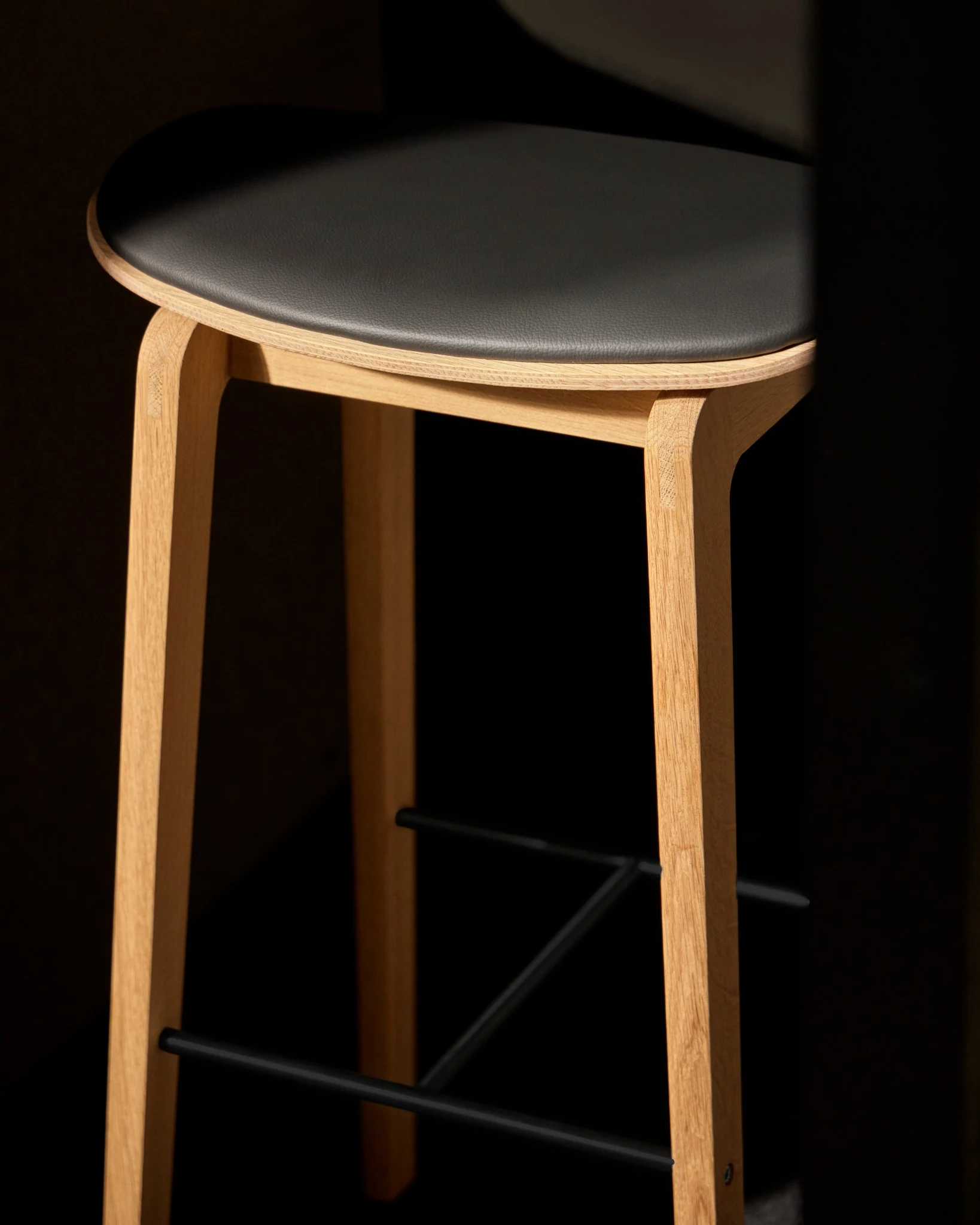
Leap went into the benches and barstools in prototyping and stayed there through production. It cut, stapled and wrapped the way the leather before it did, so the switch cost the workshop no retooling and no relearning.
That matters more than it sounds. Every Mutebox is configurable, so the material has to behave the same across a run of one and a run of fifty. Surplus from production goes back into new products, acoustic tables and frames, and components stay replaceable so a worn seat can be swapped instead of scrapped.
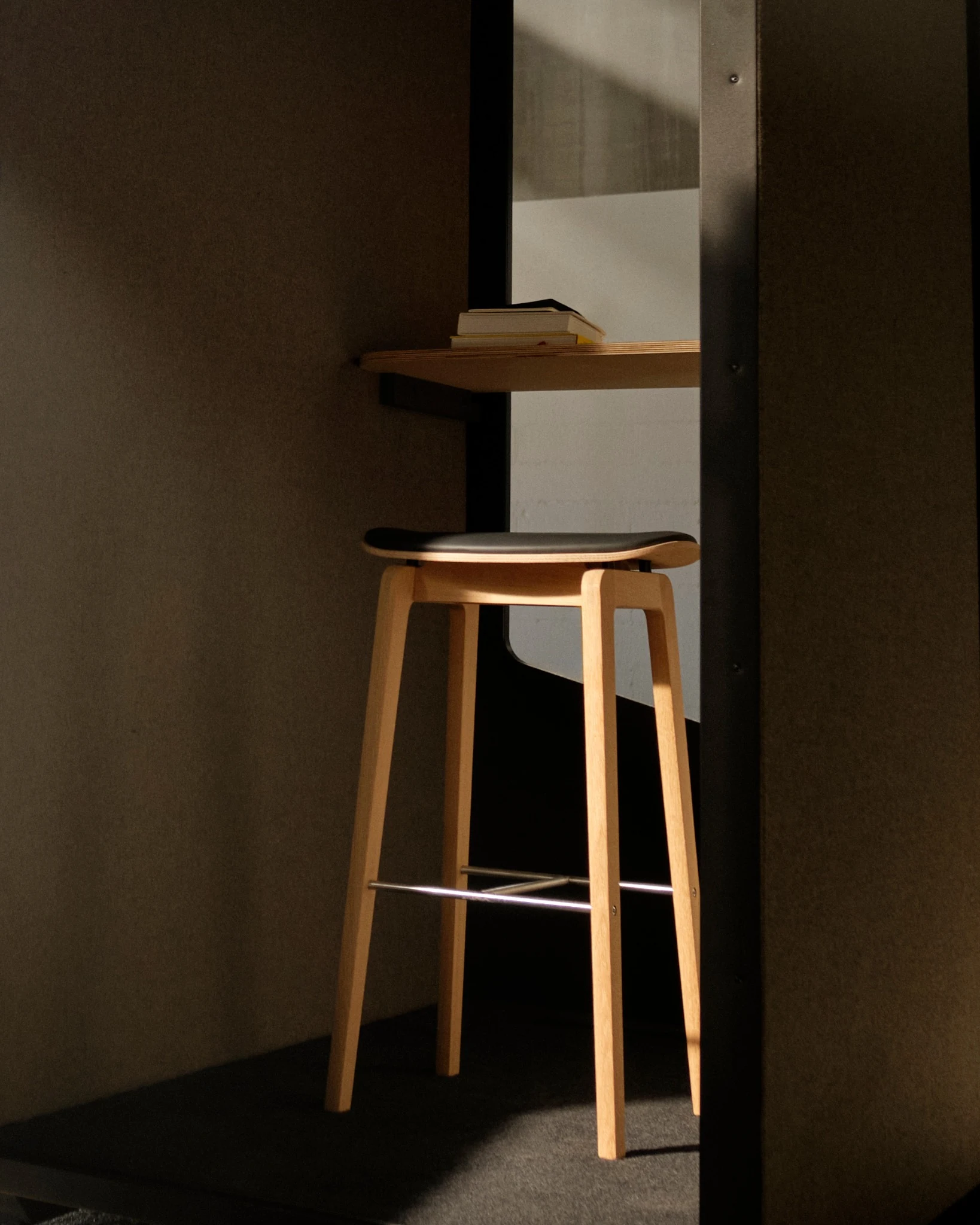
“The material stood out both in durability and feel. It didn't feel like a compromise, but as an obvious decision.”